On View
MATTHEW PILLSBURY - SANCTUARY


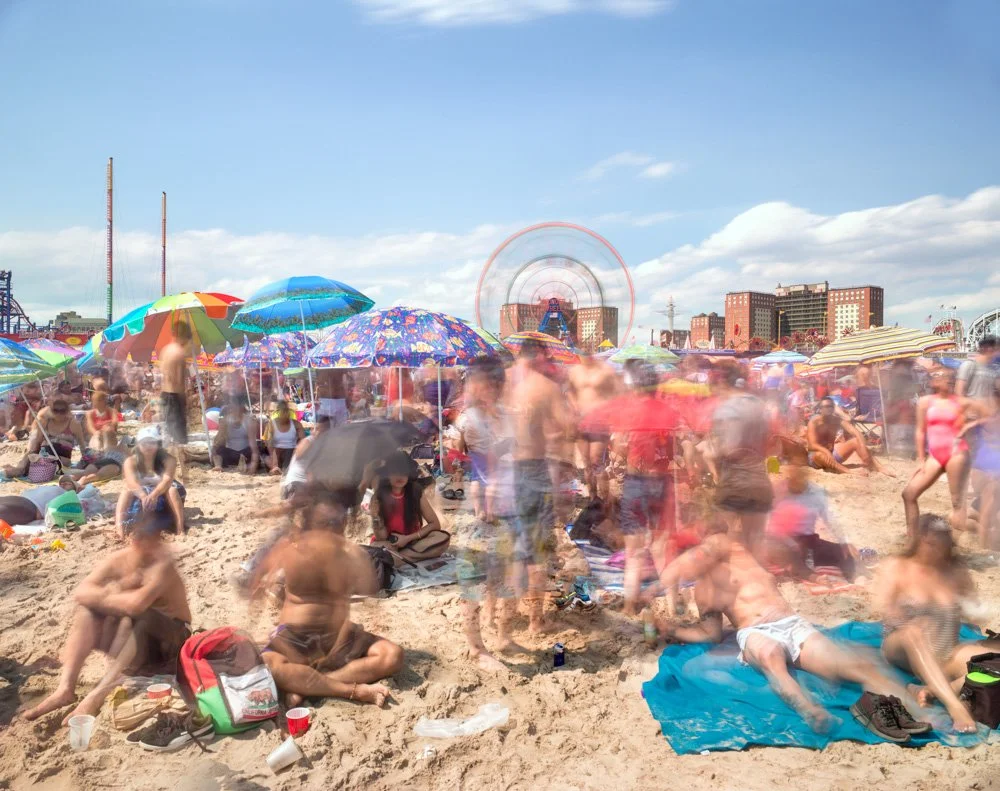


Benrubi Gallery is pleased to present Sanctuary by internationally acclaimed photographer Matthew Pillsbury. Sanctuary is Pillsbury’s sixth solo show with the gallery. His previous exhibitions include Tokyo (2016), City Stages (2012), Elapsed (2008), and the groundbreaking Screen Lives (2004).
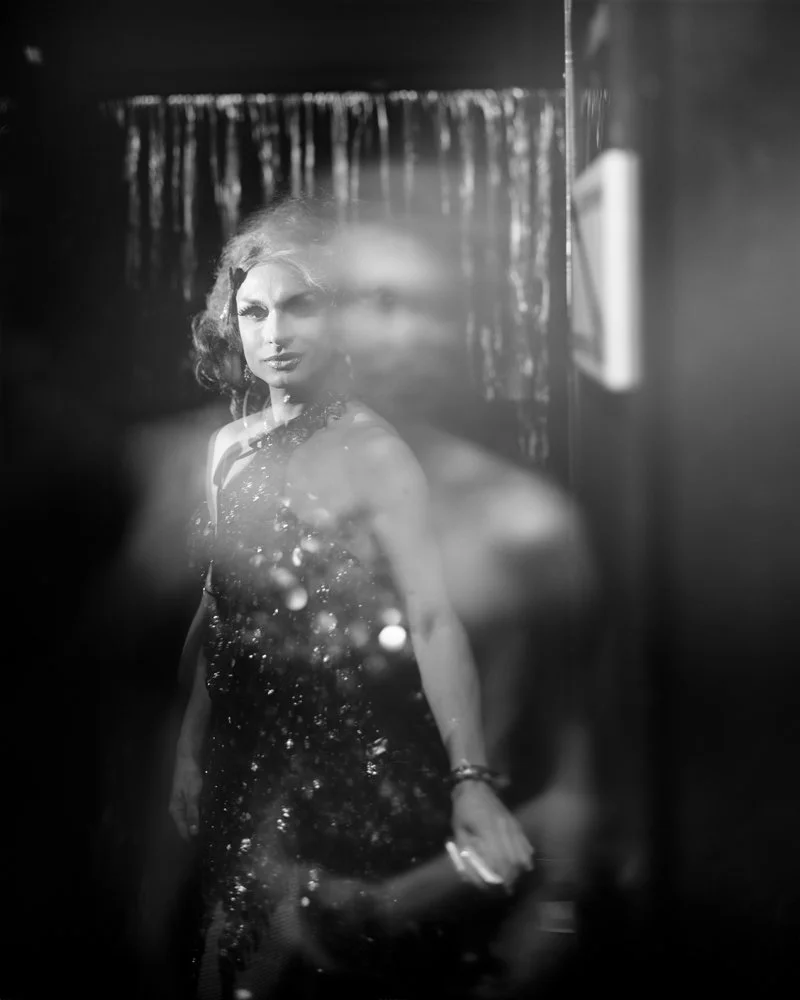
In 2002, Pillsbury began photographing friends in parks, rooftops, and fire escapes. “Television,” he has said, was “my favored way of taking a break from reality, and that is what led to my series Screen Lives and the technique of long exposures.” For more than a decade, Pillsbury has been adapting this technique to a wide variety of environments and social situations as he explores the relationship between monuments and gestures, permanence and ephemera, and the photographic habit of slicing into time without actually impeding its forward momentum.
With Sanctuary, Pillsbury returns to the idea of respite, but this time in a more urgent context. “Many of our cities,” Pillsbury writes, act as a “line of defense against an administration whose policies directly threaten rights” he had taken for granted. What had before seemed merely social or recreational has suddenly taken a political context, as some of our most quotidian yet essential activities—of assembly and expression, or simply just being here—have suddenly been revealed as contingent rather than inalienable. That many people turn to these activities and these spaces as a respite from the political is only another lay of irony, and underscores their precariousness.
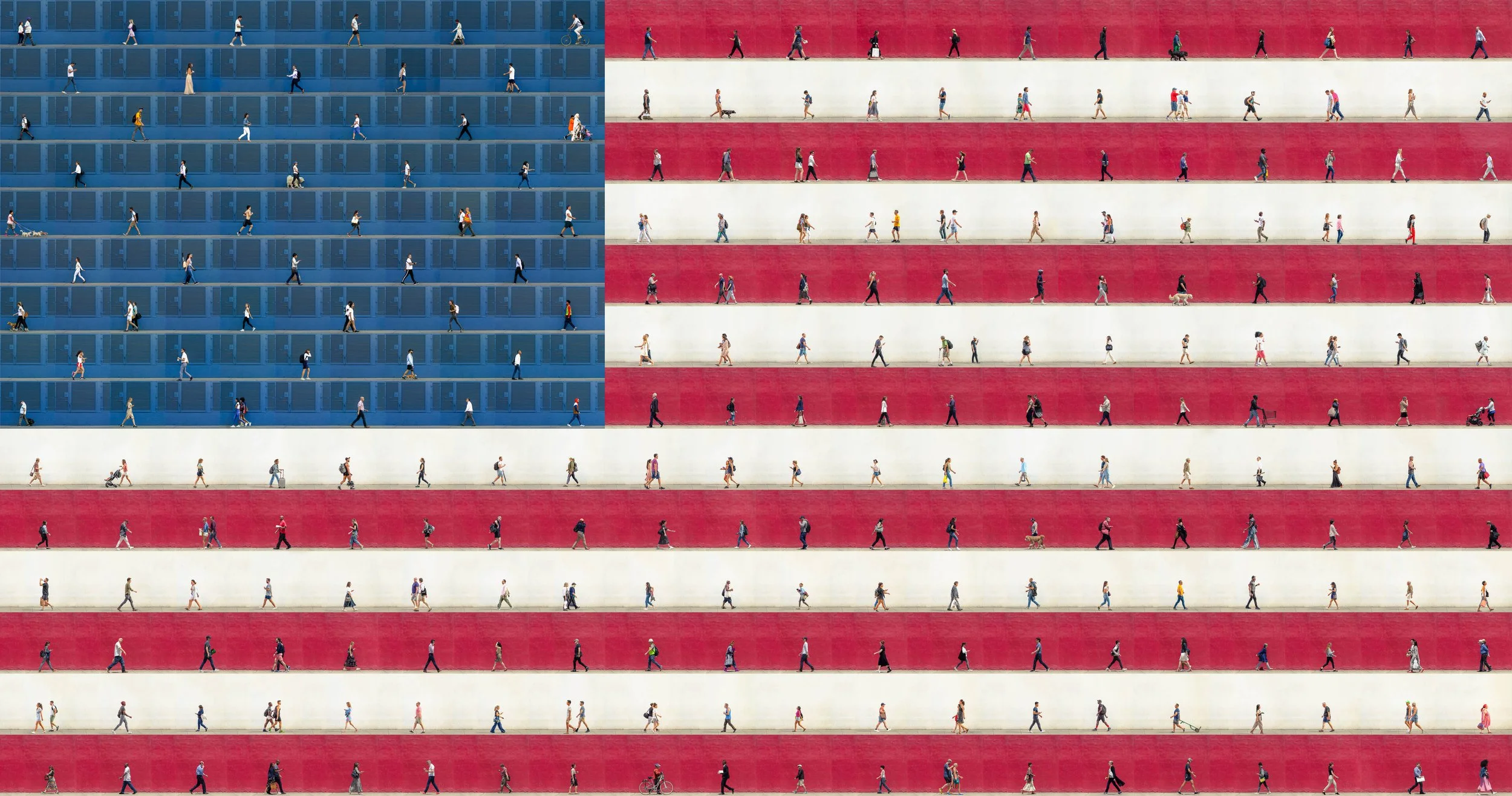
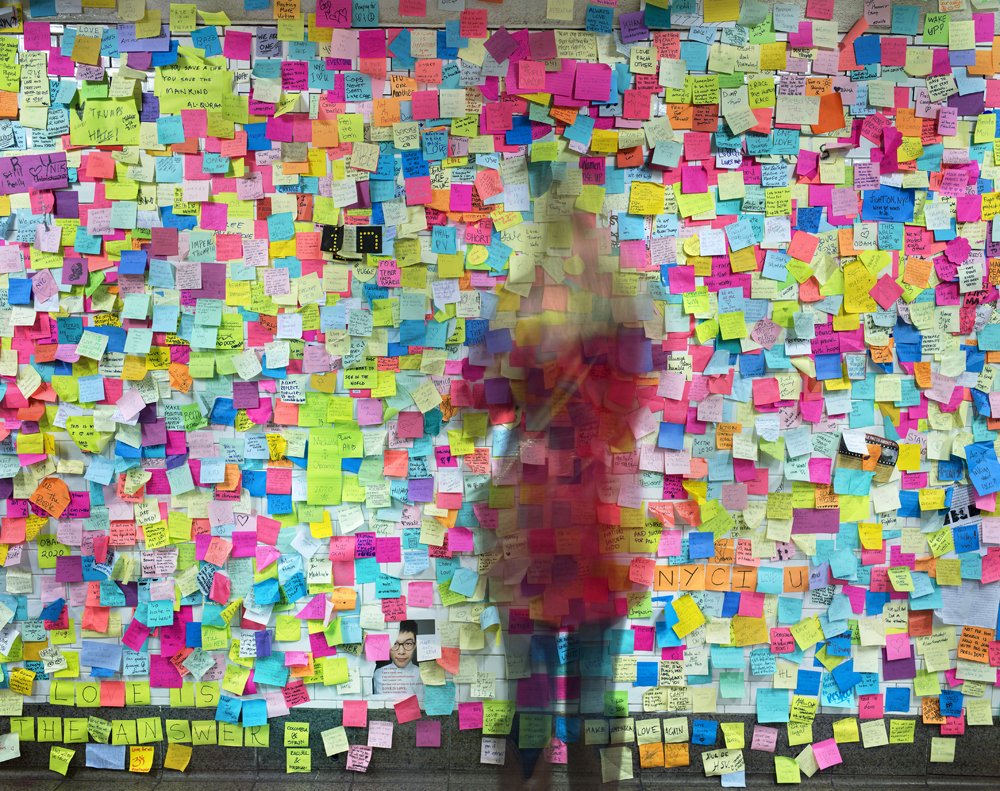
Sanctuary shows a wide variety of urban environments, from museums and galas to parades and protests and public plazas and beaches. Some are anonymous, as of high-rise views of the skyline, while others are intimate, as in a woman pausing to read the anti-Trump messages written on a wall of Post-Its in the Union Square subway station. Scenes from the Women’s March on Washington convey both the urgency of the crisis as well as the number of people it affects, whereas images of beachgoers lounging before a luminescent movie screen or wading into the water remind us of the transient nature of congregation. What emerges is a communal portrait of our shared spaces and the way they—literally as well as culturally—bring us together.
Matthew Pillsbury was born in 1973 in Neuilly, France. He received his B.A. in Fine Arts (Cum laude with distinction) in 1995 from Yale University and his MFA from the School of Visual Arts in New York in 2004. His work has been widely shown and is in the permanent collections of numerous American and international institutions, including the San Francisco Museum of Modern Art, The Museum of Modern Art, The Tate Modern, The Victoria & Albert Museum, The Yale University Art Gallery, and the Whitney Museum of American Art. He is the recipient of the 2014 John Simon Guggenheim Memorial Foundation Fellowship and the 2007 Fondation HSBC prix pour la Photographie. He currently resides in Brooklyn, New York.
For press and other inquiries, please email: info@benrubigallery.com
LAUREN SEMIVAN - PITCH


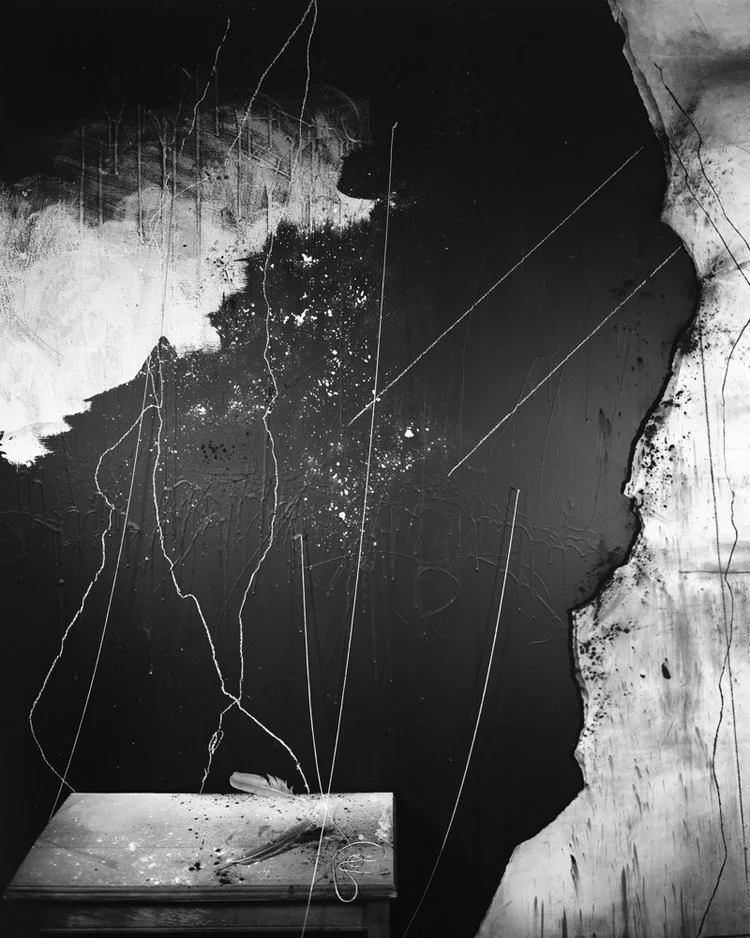


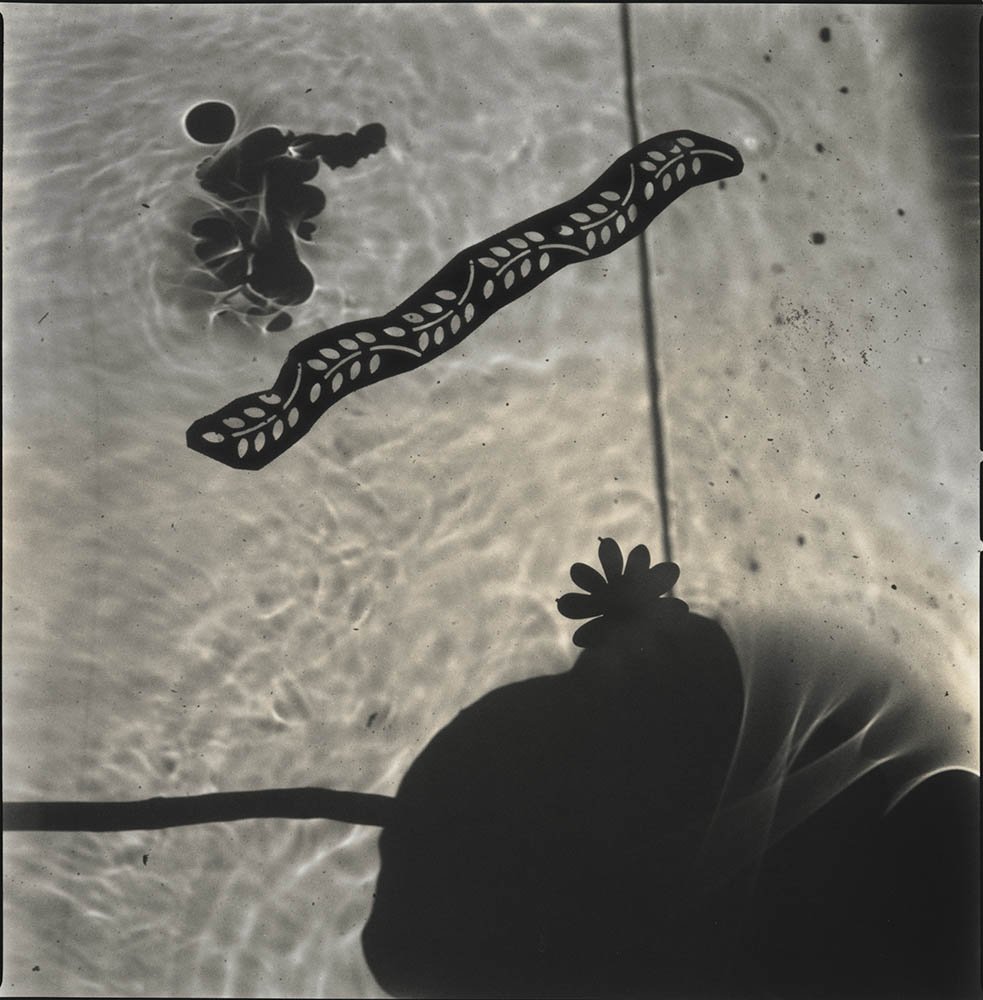
Benrubi Gallery is pleased to present Pitch, the gallery’s second solo exhibition by Lauren Semivan, after her 2013 exhibition, Observatory.
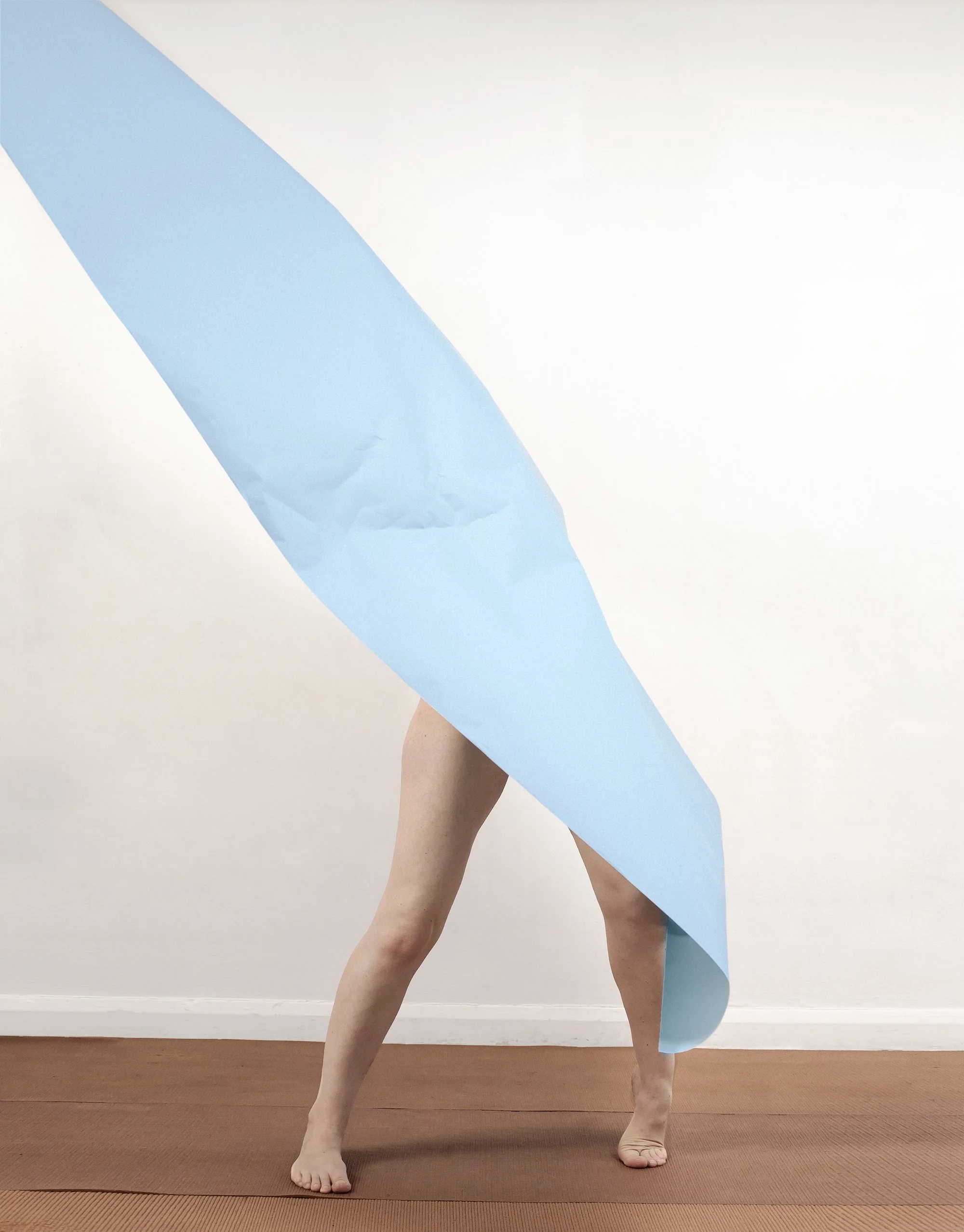
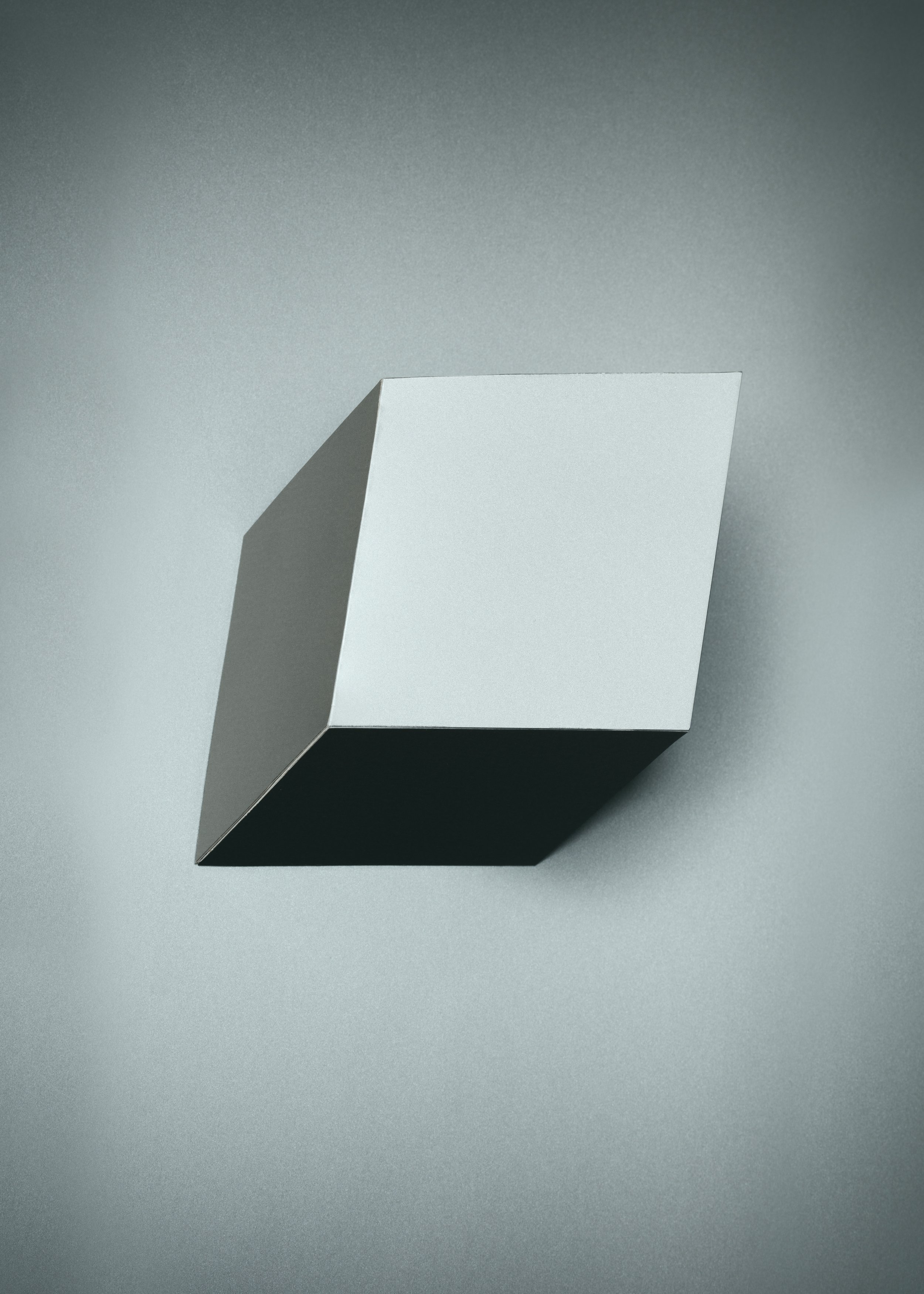
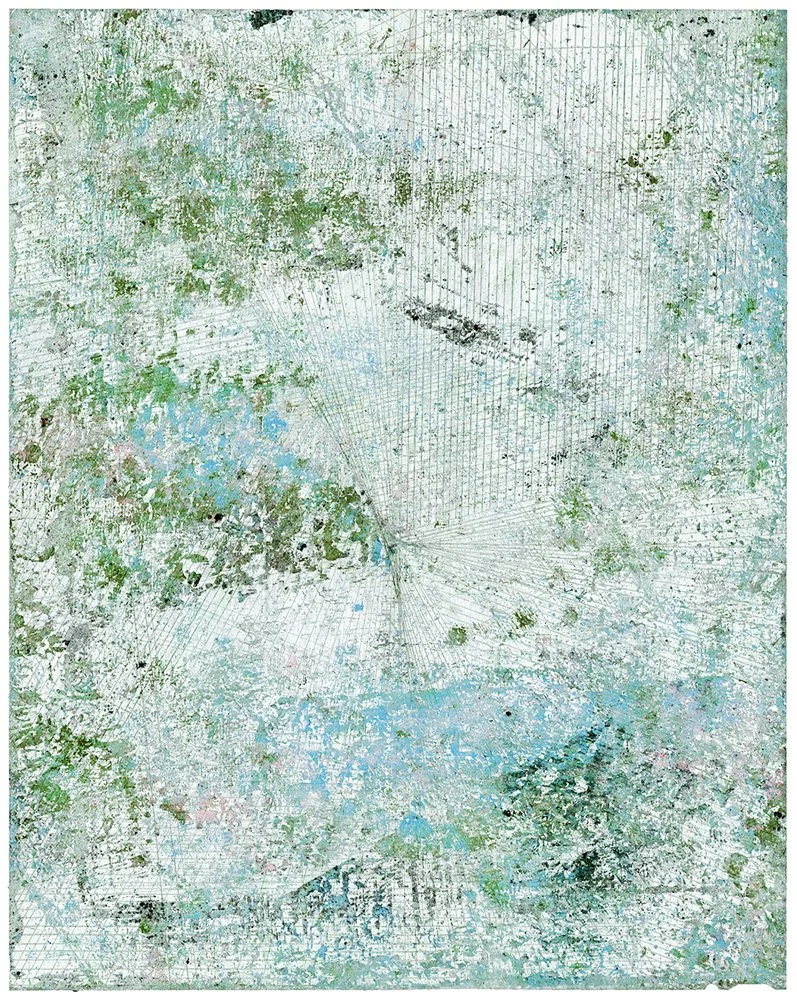
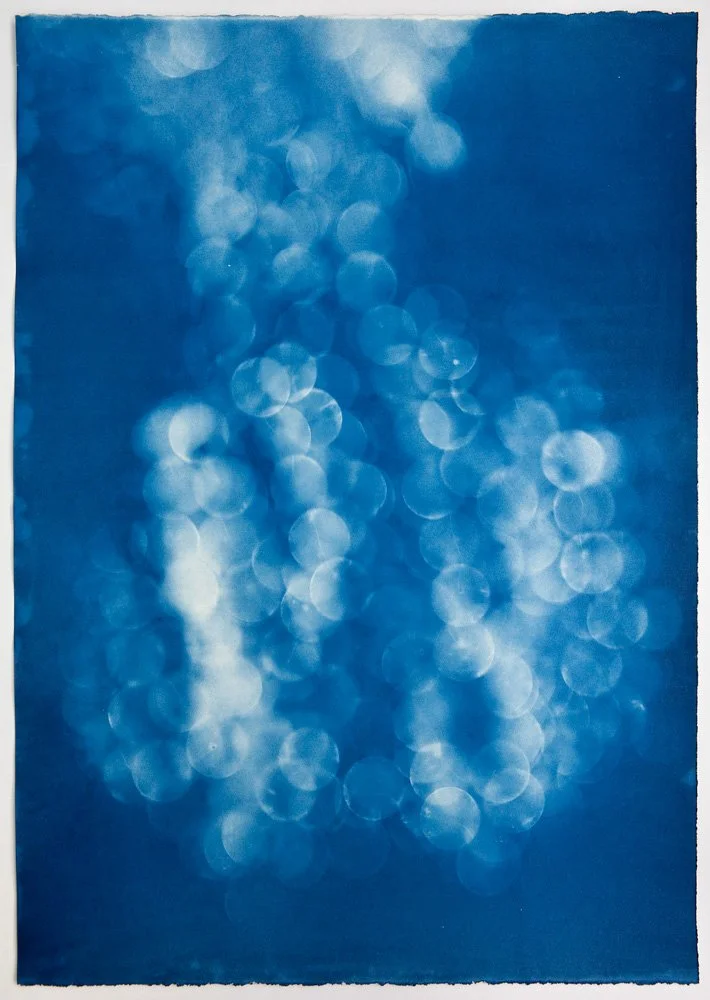
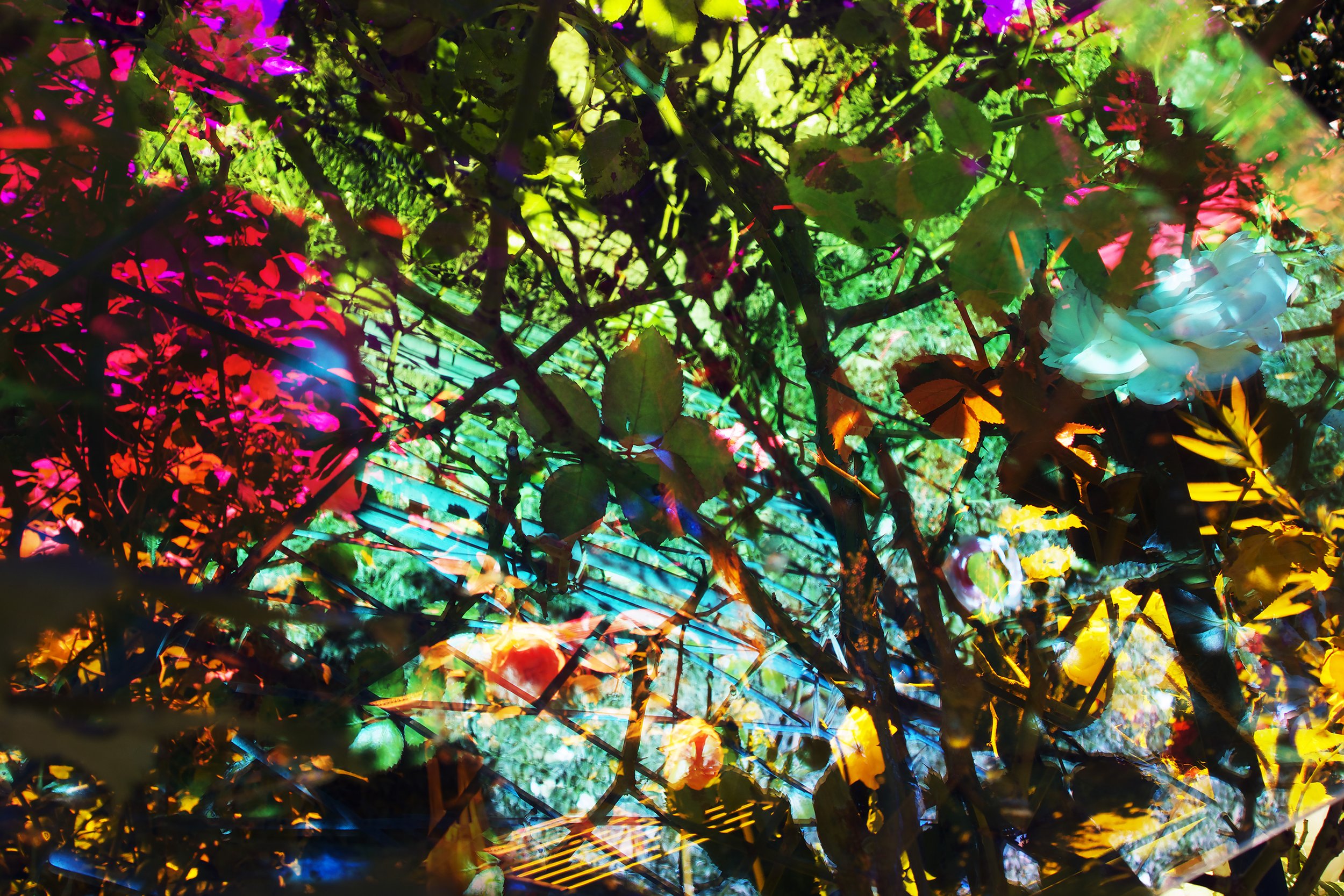
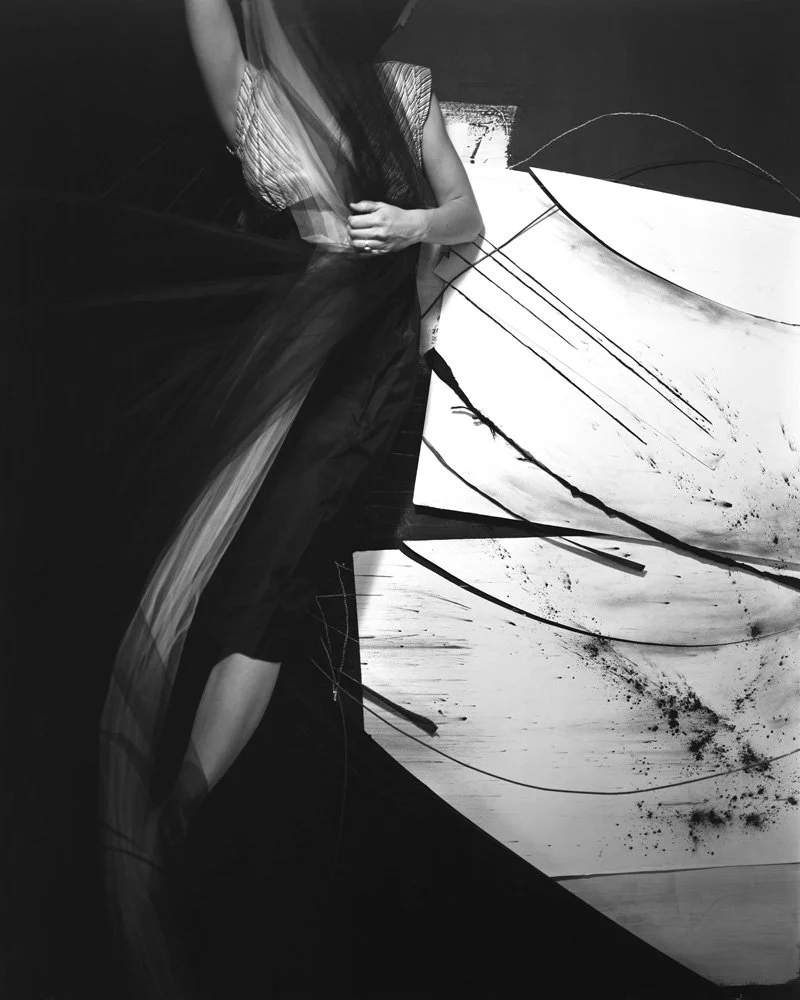
Building on the tropes of that previous show, Pitch explores the relationship between the tactile realities of the photographic medium and the conscious and unconscious contributions of the artist to the images she creates when she photographs “hand-built, sculptural environments” of her own making. As with the previous work, all images are made using an early 20th-century 8 x 10 view camera whose large-format negatives are scanned and printed without digital manipulation.
The images in Pitch are rhythmic, moody compositions built around the tension between starkly graphic lines created by pieces of string, folds in fabric and paper, or hand-drawn marks, and the softer slurries of light and shadow. Semivan builds her sets over a period of days using black charcoal, string, wire, paper, fabric, and carefully selected objects, continually monitoring the scene through the lens at it develops. The elaborate constructions last only until they’re photographed, after which they’re discarded as the stage is transformed for the next image.
Many of the images involve pieces of draped translucent fabric or animal pelts sidelit to create patterns that call to mind clouds and waves and the rippled sand after the tide has retreated. The effect is not so much of motion as of past activity—atmospheric, geological, cultural, personal—and the changes wrought by time. In the most abstracted compositions, the ground is flattened until the images seem as one-dimensional as paintings. Others acquire a depth that has as much to do with consciousness as with space.
The tension between tangible and ephemeral, concrete and abstract, is given psychological weight by the presence of the photographer in many images. Semivan uses her own body as the grounds for the string arrays or draped fabric. In doing so she seems to insist that her images be viewed not as “mere” abstractions but semantic communications—symbolic rather than literal, perhaps, but still transmitting vital information from artist to viewer.
“My relationship to photography is essentially a continuous questioning about the world and my own experiences,” Semivan says of the current series. “These images are the result of a similar continuous investigation into the invisible: an identification and interrogation of potential signals.”
Lauren Semivan (b. 1981) was born in Detroit, Michigan. She received a BA in studio art from Lawrence University in Appleton, Wisconsin, and an MFA in photography from Cranbrook Academy of Art. Her work has been exhibited nationally and internationally at many galleries and museums such as the Nelson Atkins Museum of Art, Detroit Center for Contemporary Photography, The Griffin Museum of Photography, The Hunterdon Art Museum, Cranbrook Art Museum and many more. In 2014, Semivan was a finalist for The John Gutmann Photography Fellowship and SF Camerawork’s Baum Award for Emerging Photographers. Semivan’s work is part of permanent collections at the Nelson Atkins Museum of Art, Cranbrook Art Museum, and The Elton John Collection.
For press and other inquiries, please email: info@benrubigallery.com
LENS ON LIFE PROJECT


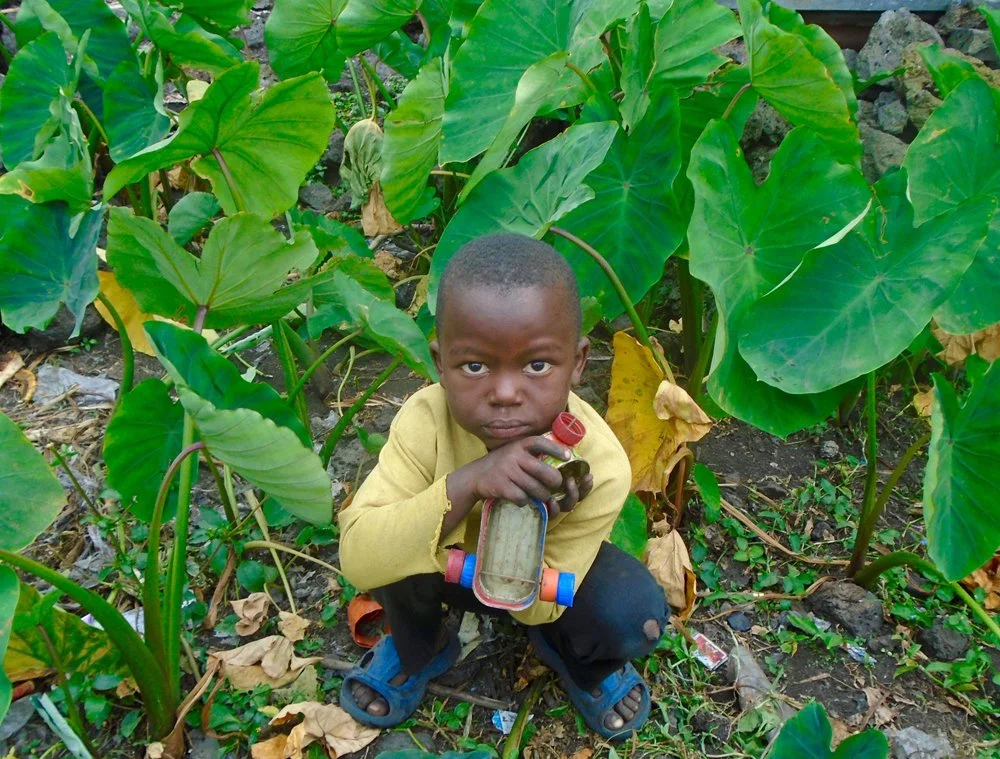


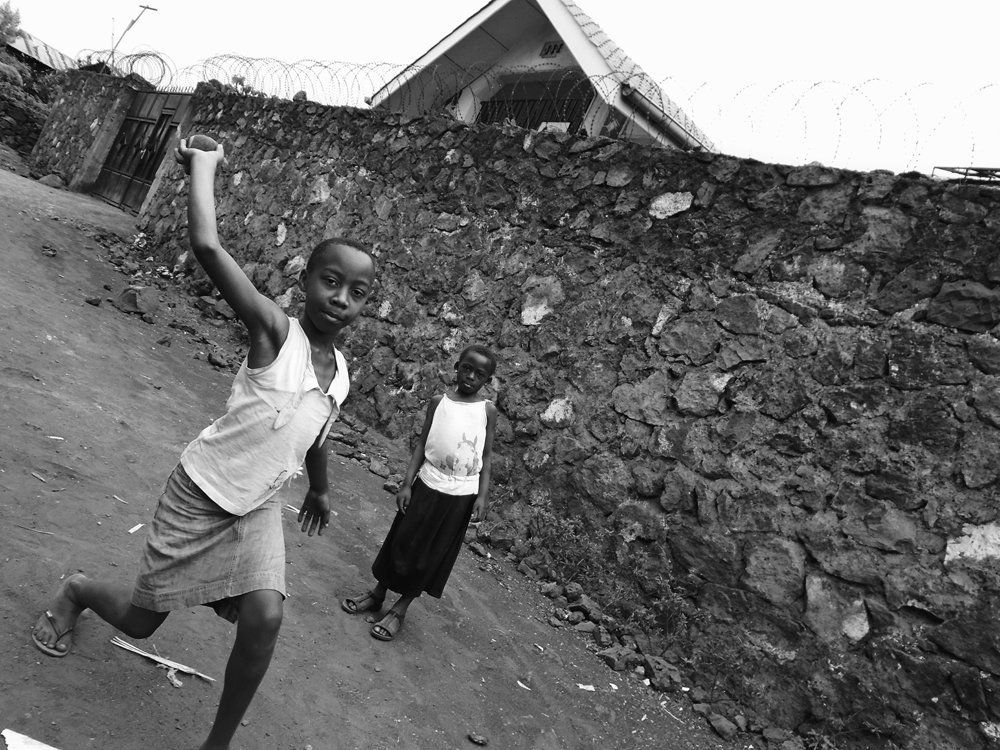
Benrubi Gallery is proud to present Lens on Life Project, a photographic project organized by brothers Sam and Jack Powers. In 2016, the Powerses led a week-long photography workshop entitled Operation Goma in North Kivu, one of the most volatile provinces in the Democratic Republic of Congo. The Powers brothers traveled to North Kivu at the behest of Camme, a Congolese non-profit organization “providing education, entrepreneurship, and social services and life skills for children” in the DRC. Their goal was to provide a setting in which vulnerable young people could both share their stories and gain a new skill to enter the global marketplace. All proceeds from the exhibition will go directly to Camme, for the construction of a media building where workshops on photography and computer literacy will be held.
All the photographs in Lens on Life were taken by children who have been orphaned, abused, or otherwise victimized by the Second Congo War, which has claimed more than 5.4 million lives since 1998. Despite this, the images emphasize community rather than trauma. Social bonds take precedence over social disarray, challenging the traditional Western narrative about life in “war-torn Africa.” Though the poverty of the region is visible in many of the pictures, it is never more than backdrop to the images’ human subjects. People are depicted at work, at play, and at rest, and have a clear sense of agency in their representation. The images aren’t a kind of naive photojournalism, but, rather, an intimate portrait of individuals who are going about their lives in circumstances that are materially very different to most Westerners, but otherwise more familiar than we might have expected.
Operation Goma and others being run concurrently in the US will serve as litmus tests for the creation of a non-profit organization led by the Powerses. The organization's goal will be to scale the model used in the Congo to provide photographic training and raise the capital needed to purchase tools and run courses in photography and computer literacy within host organizations worldwide.
Operating since 2007, CAMME RDC (République Démocratique du Congo) has worked with more than 1,500 former child soldiers, street children, former sex workers, and other disadvantaged youth to help them develop their potential and become successful members of their community. Operating a pre- and elementary school, an agricultural training program, and an entrepreneurship workshop for older youth, CAMME is legally registered under the laws of the DRC, and is operated by a team of fifteen Congolese staff in Goma. Lens on Life project annual report can be found at 520 east 86th street 5B, NY, NY 10028 or by contacting the New York State Attorney General’s Charities Bureau, 120 Broadway, 3rd Floor, New York, New York 10371.
CAMME USA is CAMME RDC's US-based affiliate. A registered 501 (c) (3) non-profit (EIN-45-3571880), CAMME USA works to support youth-focused organizations in the DRC, and to promote awareness of the challenges facing youth in a troubled region. Contributions to CAMME USA are tax-deductible to the full extent of the law.
For more information please contact: info@lensonlifeproject.org
For press and other inquiries, please email: info@benrubigallery.com
MASSIMO VITALI - DISTURBED COASTAL SYSTEMS
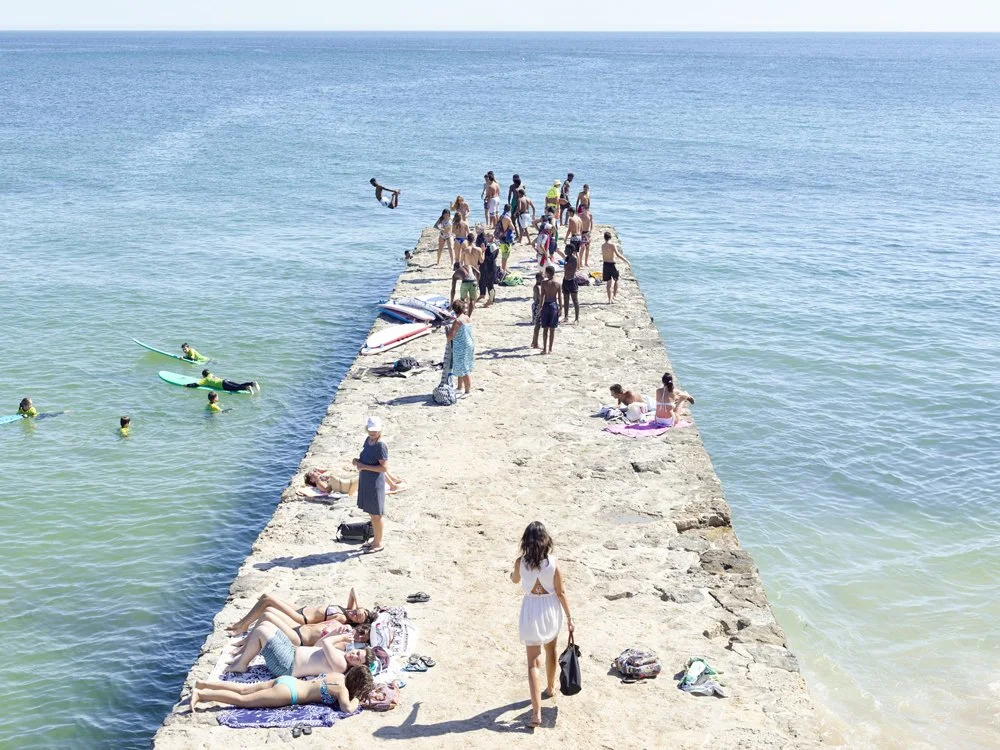
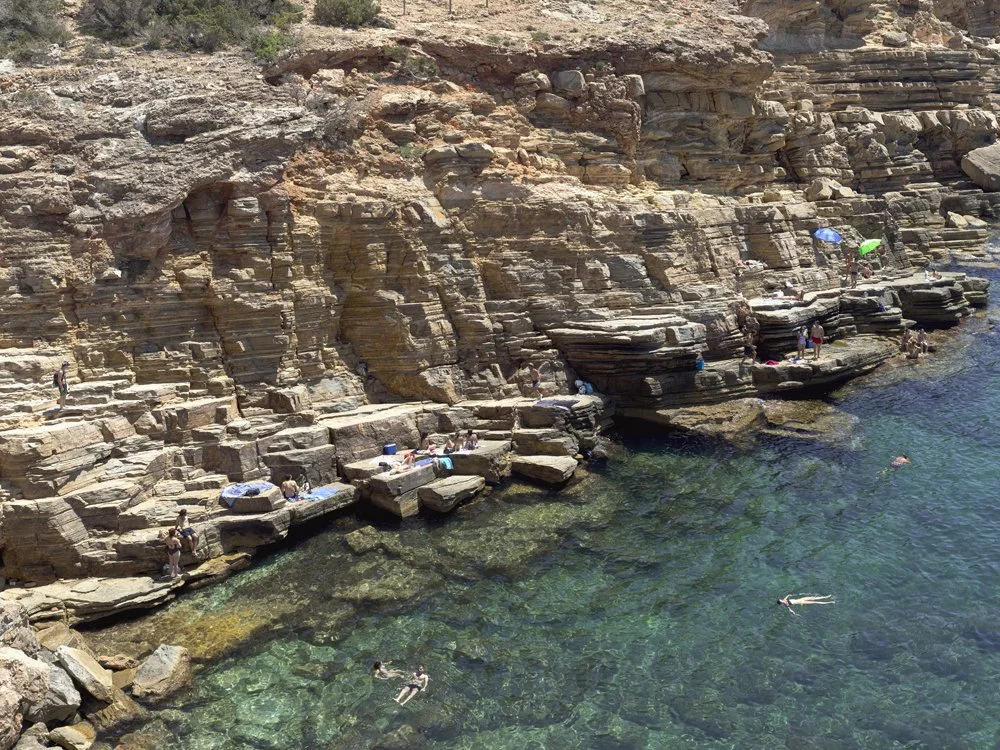

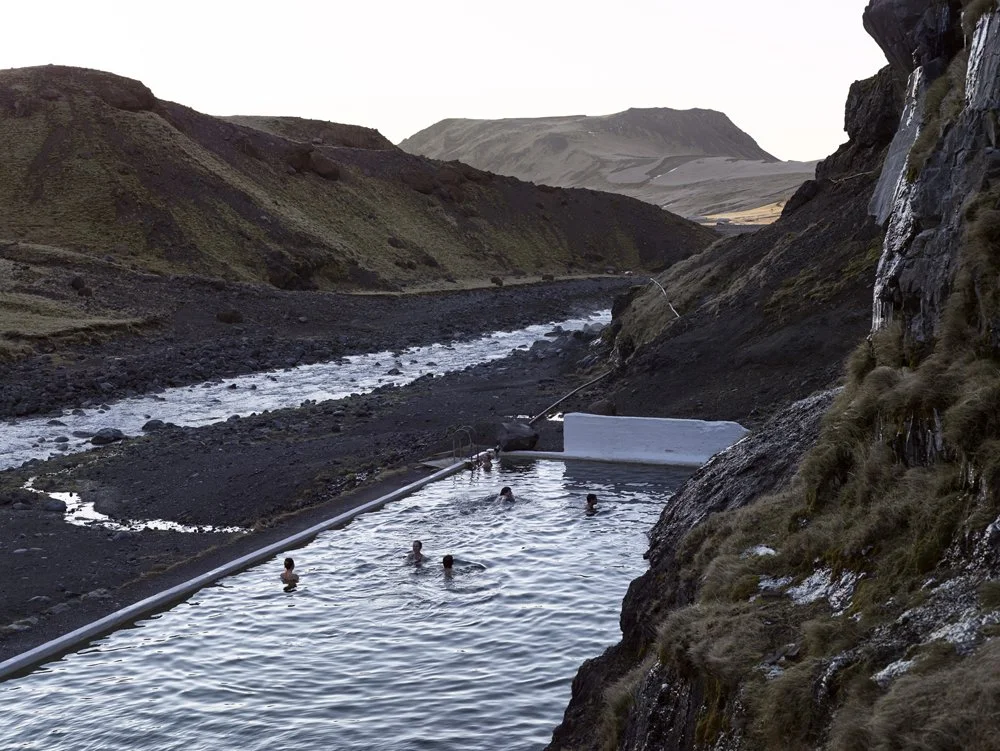
Benrubi Gallery is pleased to announce Disturbed Coastal Systems, the latest exhibition by internationally acclaimed photographer Massimo Vitali.
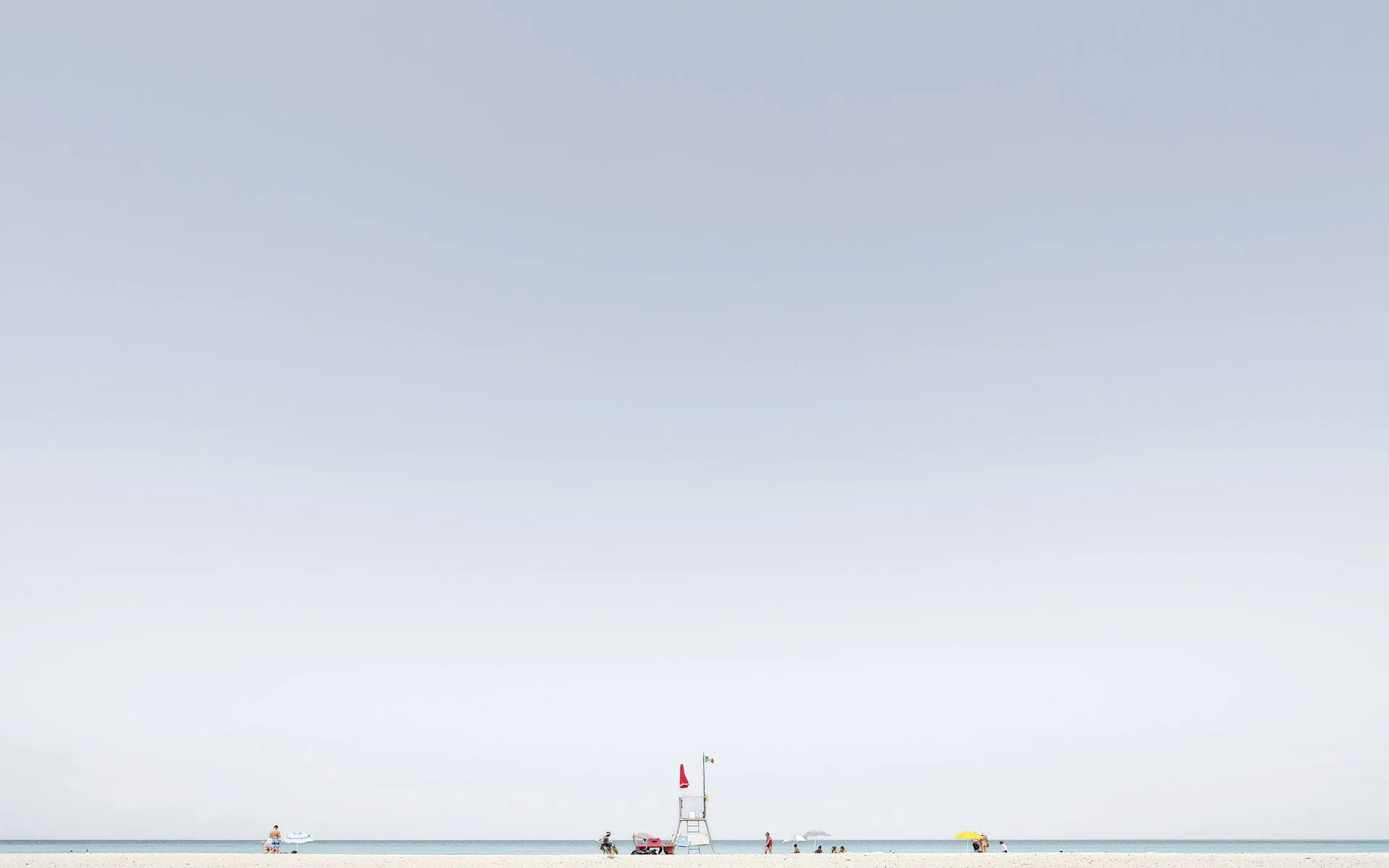
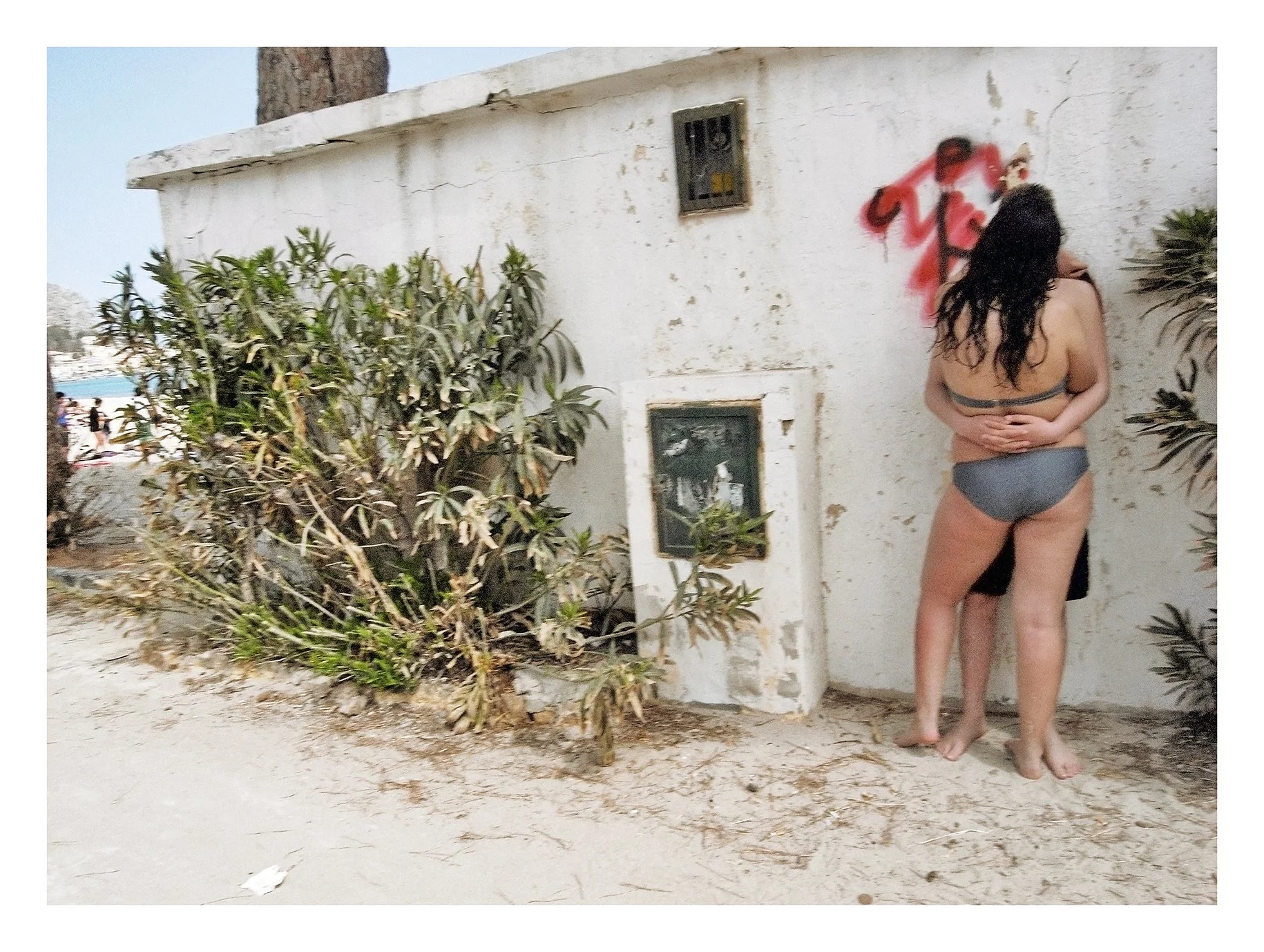
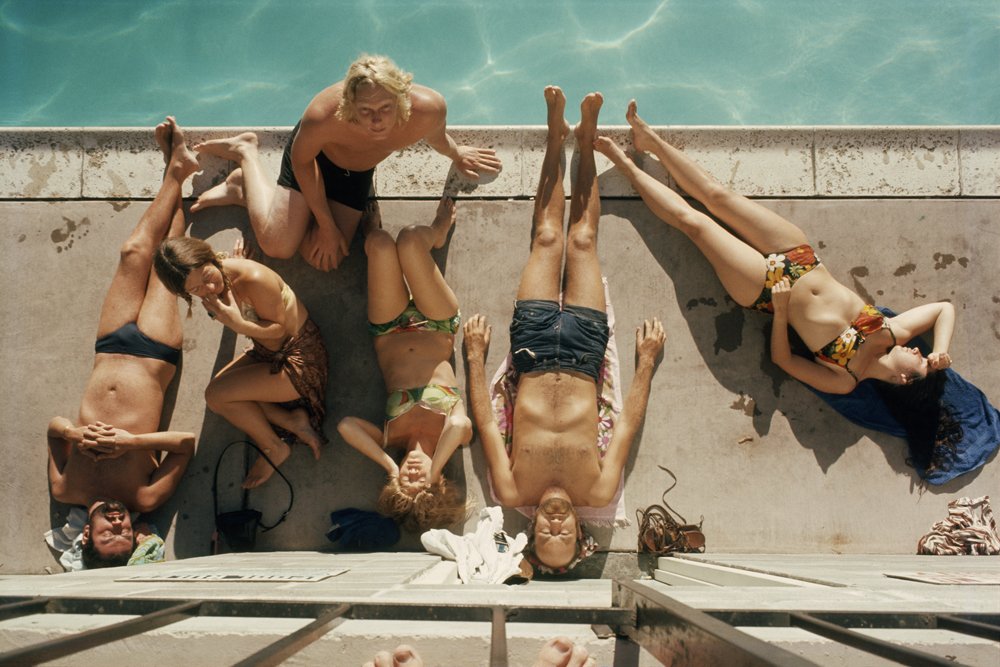
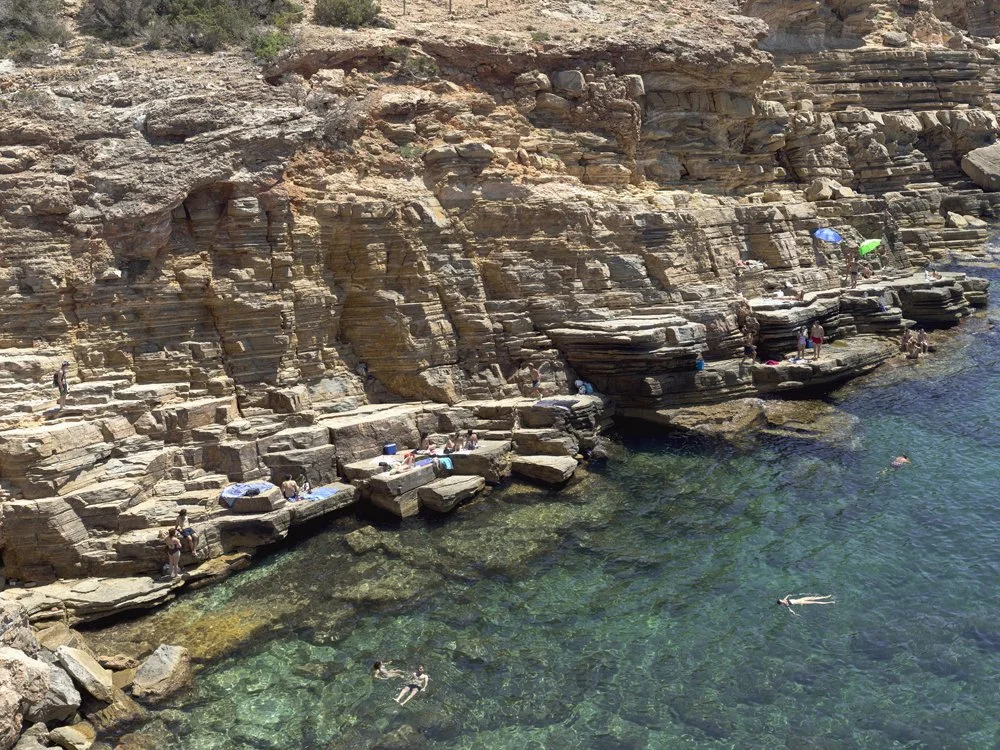
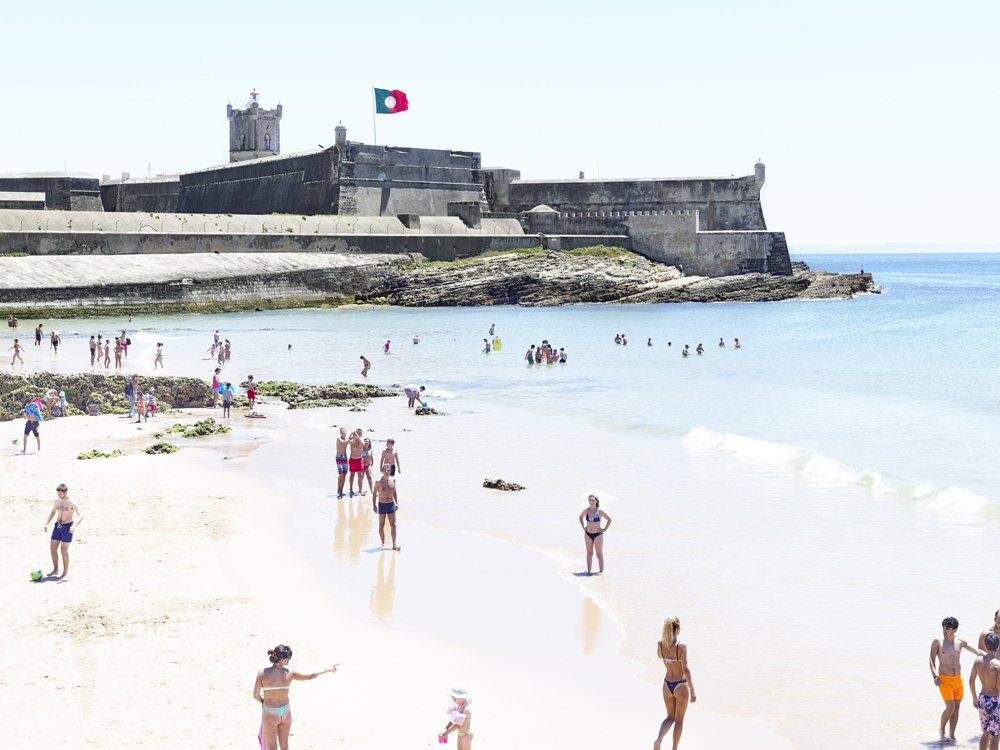
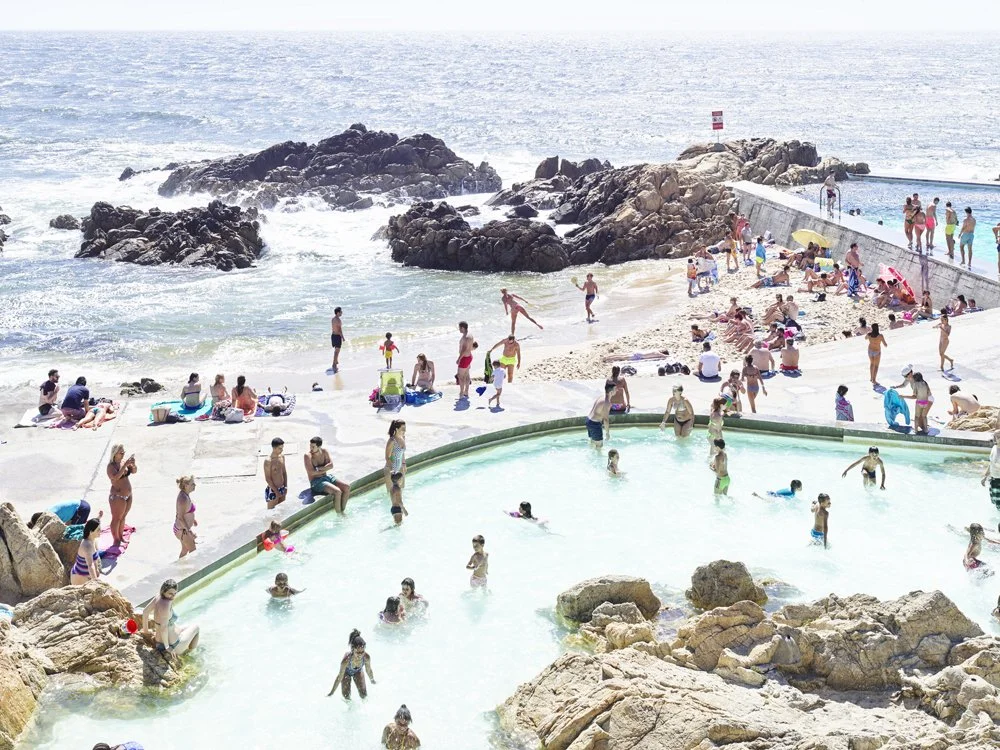
The subject of Vitali’s latest exhibition is the intersection of land and sea, the end of the terrestrial human habitat and the beginning of the aqueous. As is usual for Vitali, the pictures are heavily populated and feature an elevated, distant perspective that captures thousands of square meters in the frame, simultaneously magnifying the grandness of the landscape and multiplying the human presence. These are landscapes, but they’re also crowd scenes. Individuality is less important than the tribe, and the very idea of the frame is threatened by the enormity of the scenes they attempt to contain.
The tension between human habitat and the natural world is always present in Vitali’s work, yet is even more emphasized in the current pictures. In one, the massive Praia da Torre Fortress shadows a beach in Portugal; in another, the Praia do Moinho juts out into the water, less protective than glowering—though whether it menaces the ocean or the swimmers depends on your point of view. Concrete pools box off becalmed sections of water from adjacent rivers and seas, or a concrete pier juts out beyond a beach, its hard rectangular lines in unavoidable contrast—conflict?—with the sinews of sand and surf. What land is visible is often sere and forbidding: rock cliffs in which wispy shrugs have taken tentative hold, gravelly beaches, lumpy hills covered in dry grass.
It takes an act of will to turn these environments into playgrounds. And indeed, though some of Vitali’s human subjects revel in the surroundings—a girl turns a cartwheel here, a boy goes for a cannonball there—many of the human players stand with their gaze aimed at the horizon as if keeping watch, for a storm, maybe, or a shark fin. Then, too, this is the coast along which more than a million Syrian, Afghan, and Iraqi refugees first arrived in Europe—not all of them alive. The refugees aren’t on your mind when you first look at the pictures, but once you think of them you can’t stop looking for them just beyond the edge of the frame.
And as in so many Vitali pictures, there are always one or two people regarding the camera. In some cases the gaze is quizzical, if not downright suspicious; in others, it’s self-consciously boastful, as if subjects were bombing a gigantic selfie. Their gaze reinforces our sense of ourselves as voyeurs, but the smallness of each individual face amidst the vast sea emboldens us to step a little closer, stare a little harder. There is always an imminence in these vast scenes, as if, if the beachgoers wait long enough, something will happen. Yet the swimming and sunbathing and standing around are all that ever happens, and one can almost see the relief in the faces of those who are packing up or showering off in preparation to leave. Yet somehow one knows they’ll be back tomorrow.
Massimo Vitali (born in Como, Italy, 1944) studied photography at the London College of Printing. He worked as a photojournalist in the 1970s, but at the beginning of the 80s a growing mistrust in the belief that photography had an absolute capacity to reproduce the subtleties of reality led to a change in his career path. He began working as a movie camera operator, before beginning a fine-art practice in 1995. Vitali’s work has been collected in four monographs: Beach and Disco, Natural Habitats, Landscapes With Figures, and Landscapes With Figures 2. His photographs have been published in magazines, newspapers, and other periodicals around the world. Additionally, his work is represented in the world’s major museums, including the Centro de Arte Reina Sofia in Madrid, the Guggenheim Museum in New York, the Museum of Contemporary Art in Denver, the Fond National Art Contemporaine in Paris, the Centre Pompidou in Paris, the Musée National d’Art Moderne in Paris, the Fondation Cartier in Paris, and the Museo Luigi Pecci in Prato.
For press and other inquiries, please email: info@benrubigallery.com
ERIC CAHAN - RABBITS, RATS & CATS


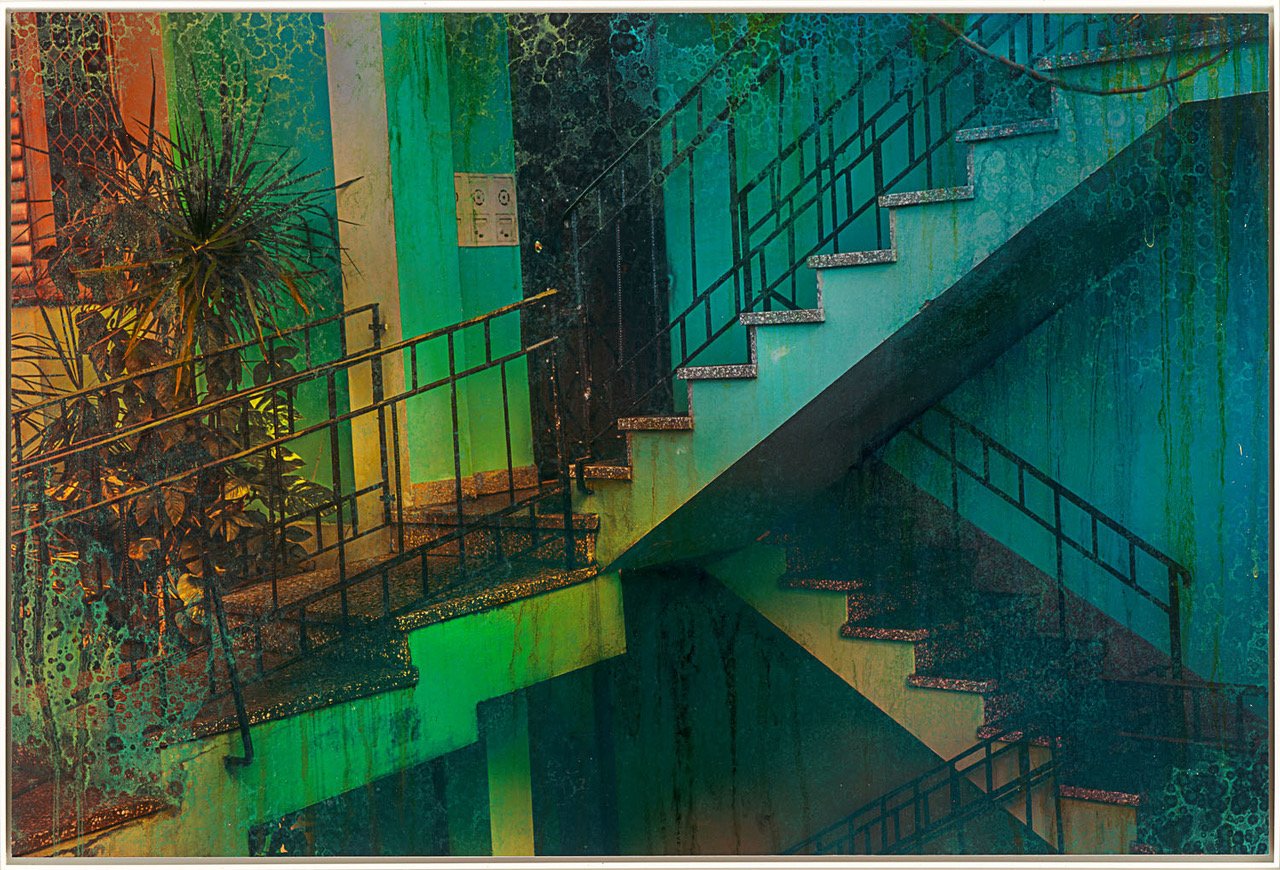


Benrubi Gallery is pleased to present Rabbits, Rats & Cats, the gallery’s second solo exhibition by Eric Cahan, after 2013’s Sky Series.
Cahan visited Havana, Cuba and its nearby villages three times in 2016, spending significant time in El Barrio del Fanguito, where he was witness to Cuba’s social immobility and poverty, as well as to a lifestyle more in harmony with nature and the basic needs of its citizens than that of much of the West.
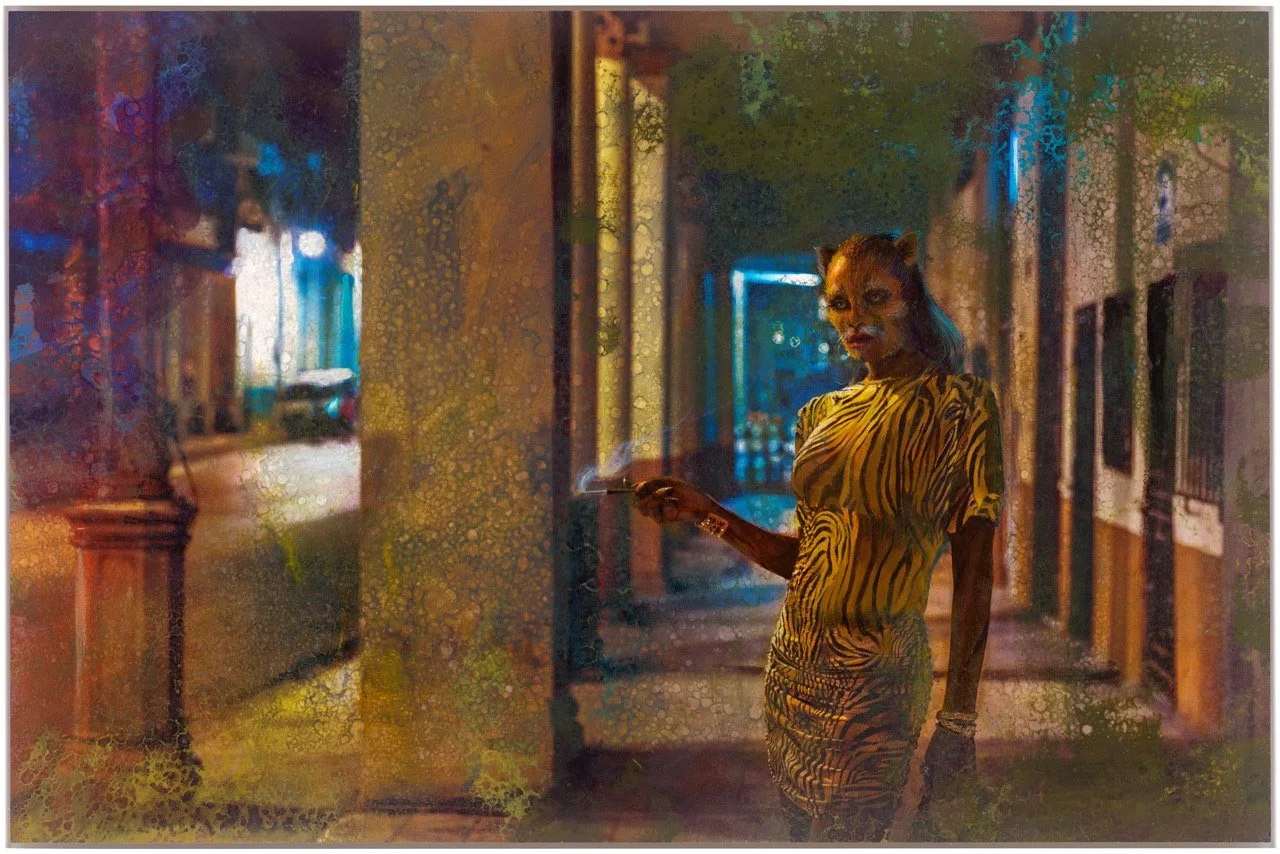
While in Cuba, Cahan took part in two Ayahuasca ceremonies, which opened his heart and mind to new ways of seeing, and gave him a sense of connection to the people around him, and to their own connection to their land. Rabbits, Rats, and Cats was born out of these experiences. It integrates Cahan’s artistic practices, presenting photography, painting, and a film documenting his alternative vision of Cuban life, where inhabitants are portrayed as hybrid animal-human forms and anthropomorphic extensions of their surroundings.
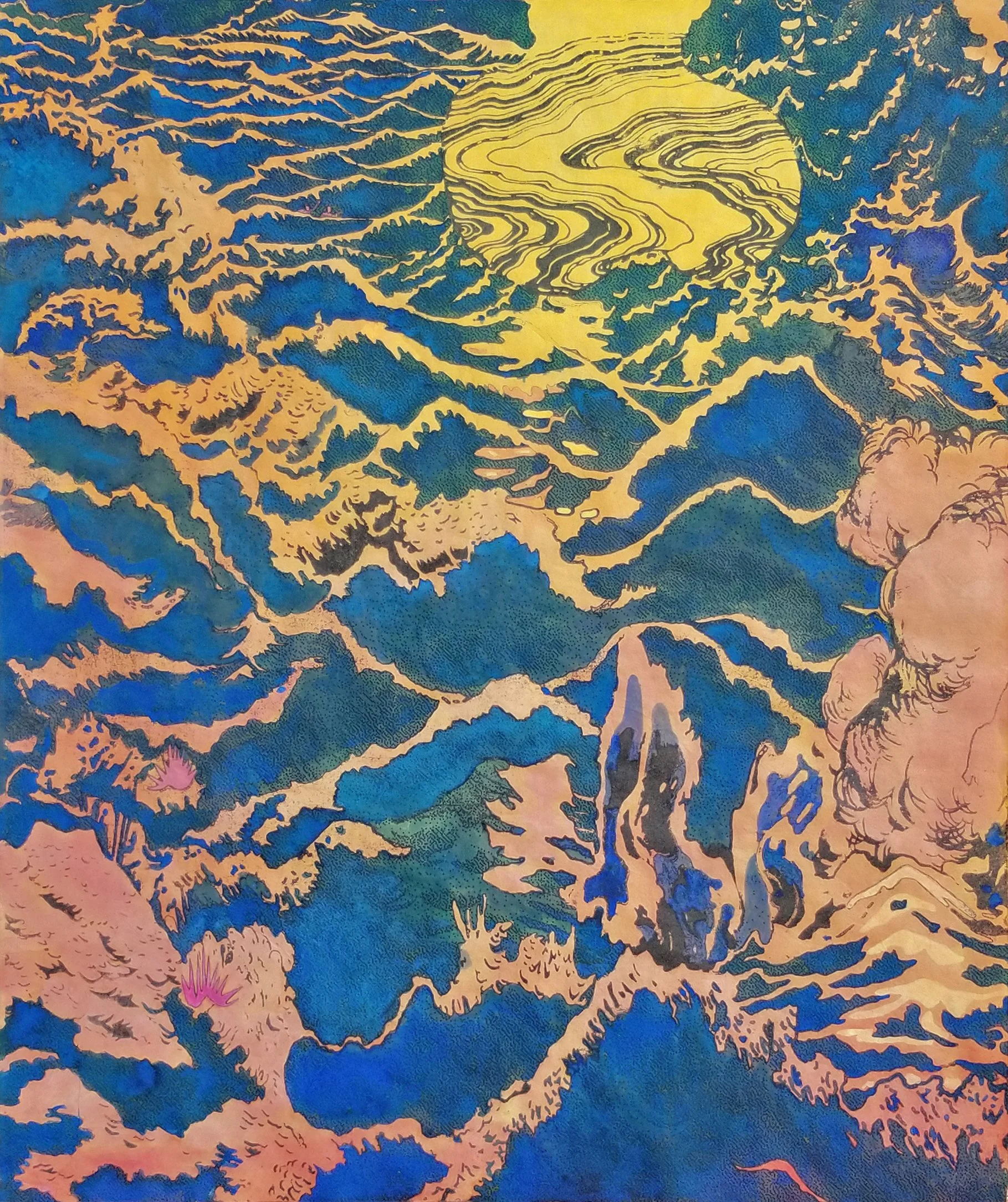
Using his photographs as a blueprint, Cahan enhanced each image through an alchemic treatment that tessellates the photographic surface, some of which is layered in oil paint, while other sections are reduced to phthalo shimmers, before the picture is finished with a crackle varnish that resembles the scaling in the initial strata. Cahan’s manipulations unmasks the supposed objectivity of the photographic process as the subjective perspective it is, while the arbitrary and often surreal details of the painted imagery acquire a documentary inevitability in conjunction with its photographic base.
Cahan’s painted images hearken back to 19th-century color photography, whose painstakingly hand- tinted prints seem to modern eyes uncanny in their meticulous detail. However, the stripping and accreting process of Cahan’s modern approach echoes the Ayahuasca experience of peeling back layers of existence to reconfigure one’s perspective. Cahan’s subjects retain their every-day identity and remain in their quotidian reality, but now possess an added or revealed aura of vivid psychological, cultural, and spiritual significance. The tension between the subjects’ gritty, impoverished setting and the vibrant colors and hallucinogenic imagery results in images that are at once documentary and fantastic, sober and liberating, and filled with compassion and connection for both the seen and unseen worlds.
Accompanying the paintings is a nonlinear film constructed from fragments of Cahan’s documentation and the resulting paintings, all of which give physical form to the artist’s psychedelic- evoked reality. Inspired by details in the paintings, a collection of generic suicide notes, as well as the psychological images they evoke, Cahan’s narrative voice-over acts as a guide to the film, which chronicles the death of the artist’s ego and his awakening into a new plane of coexistence. Like the photographs, the film gives form to otherwise non-corporeal mental states, while simultaneously challenging our assumptions about what we really see when we look at the world.
Eric Cahan was born and raised in Manhattan. He studied at The University of Southern California and New York University, where he graduated from The Tisch School of the Arts' Film Program. He currently resides in Brooklyn, New York.
For press and other inquiries, please email: info@benrubigallery.com
JUDE BROUGHAN - ATHENREE
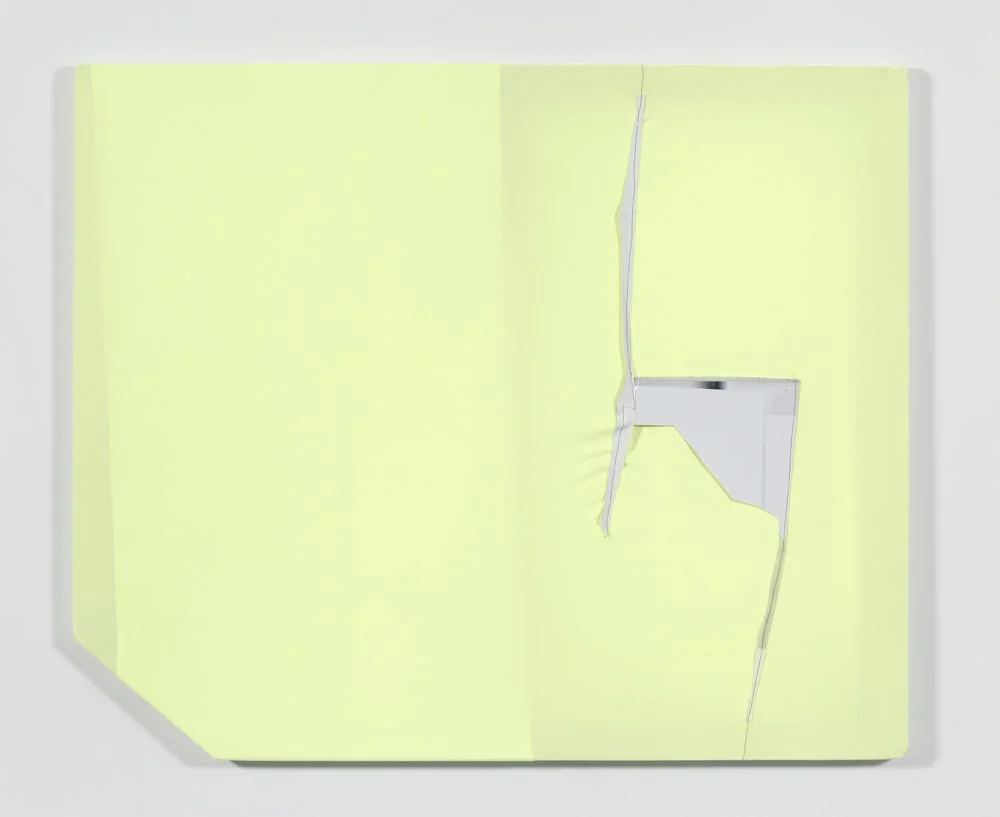


Benrubi Gallery is pleased to present Athenree, the gallery’s first solo exhibition by Brooklyn-based artist, Jude Broughan. Athenree is a tiny beach town in the coastal Bay of Plenty, in the artist’s native New Zealand. It was named after the Northern Irish ‘townland’ that is home to the monolithic Athenree Portal Tomb. Revealing an interest in the process of traveling and the concomitant instability of ‘place,’ Broughan’s new works state their claim on the here and now while simultaneously questioning exactly where and when this might be.
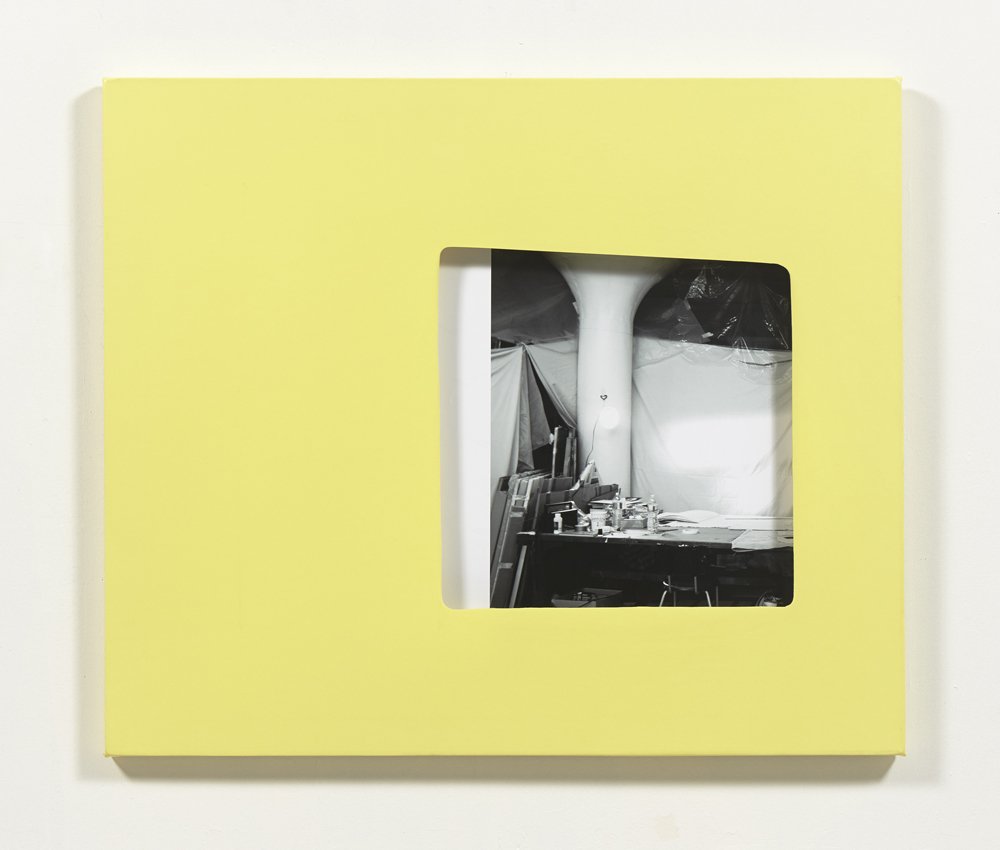
In assemblages, loose-hanging works, mixed-media panels, and photo collages, Broughan draws on the languages of painting and printmaking alongside those of photography and collage to play with space and form, line and color. Using colored vinyl, leather, denim, and polyester grounds, she alludes to her own physicality while pondering the nature of artistic production itself.
Broughan manipulates her photographs visually and physically, subtly shifting the emphasis of personal and quotidian imagery in some works, referencing the language of commercial imagery in others. Her use of stitching—a strategy informed by Warhol’s “Sewn Photographs”—inserts shots distinguished by their immediacy into carefully composed arrangements, the thread dividing our attention between the physicality of the art object and the patterning of its surface. By also cutting holes or apertures in her works’ supports, Broughan refers to the mechanics (and limitations) of photography, digital manipulation, and vision itself, and alludes to our seemingly innate tendency to edit. As New Zealand artist and critic Peter Dornauf writes, this “exposes the constructed nature of the subject while also providing a simulation of depth, which seems like the contradiction it actually is. Such incongruity and paradox is the essence of this artist’s practice.”
Jude Broughan is a New Zealand-born artist living in Brooklyn, New York. Recent solo and group exhibitions include “Best of 2012,” Soloway, Brooklyn, and “Written By Snakes,” Churner and Churner, New York (both 2012); “New. New York,” Essl Museum, Vienna (2012–13); “Plot,” Dimensions Variable, Miami, and “Certain Lights” Churner and Churner, New York (both 2014); “A Weekend in the Country” Magnan Metz Gallery, New York, and “Honey,” Calder & Lawson Gallery, Hamilton, New Zealand (both 2015); and “Ornamentation of the Joint,” Old Pfizer Building, Brooklyn (2016). Broughan is a 2015 Pollock-Krasner Foundation grantee and a graduate of the School of Visual Arts and Hunter College.
For press and other inquiries, please email: info@benrubigallery.com