



What remains of love after love?
Renowned Spanish artist Marta Soul explores female desire and the artifice of romantic relationships in her first solo exhibition in New York.
Benrubi Gallery is thrilled to present Love After Love, curated by Ângela Berlinde, on view from September 24 to November 30, 2026. Bringing together pictures and photographic installations of works from Idilios, End of Love, Minerva is not a Roman godess and Love me tender series, specifically works never exhibited before.
The exhibition draws on more than fifteen years of sustained inquiry into female identity, desire, and the cultural narratives that shape our emotional lives. Soul’s protagonists desire, choose, and construct their own fictions while negotiating the roles and expectations placed upon women.
The title, Love After Love, opens a question about persistence: what remains of love as its images, gestures, and forms of relationship change? In her curatorial essay, Ângela Berlinde describes Soul’s work as a visual chronicle of affection in our new times of cholera, times marked by hyperconnection, loneliness, and the slow epidemic of emotional fatigue.
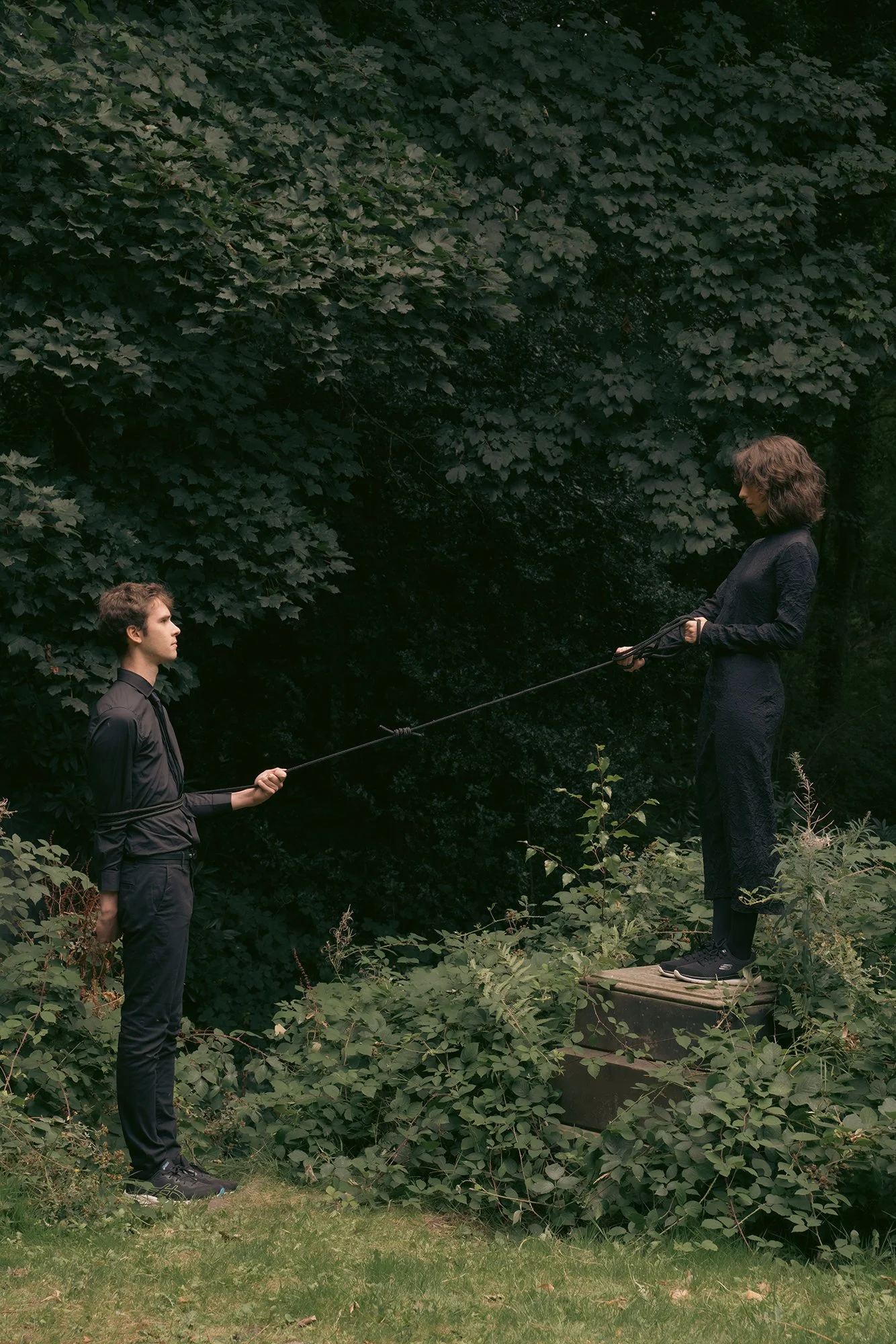
Through images loaded with both luminosity and irony, Soul reimagines intimacy as both performance and survival. Carefully constructed settings, seductive colors, and choreographed gestures draw on cinema, advertising, and romantic melodrama. Artifice becomes part of the experience of love, offering models, nurturing fantasies, and shaping what we hope to find in another person.
At a time when encounters unfold at the speed of algorithms, Love After Love asks what remains of affection. Romantic narratives reappear filtered, accelerated, and endlessly repeated, while the desire for closeness coexists with constant exposure. Between the speed of images and the time it takes to build a relationship, Marta Soul finds a space of tension, humor, and tenderness.
Within this universe, relationships are also imagined, staged, and mediated. Digital encounters, idealized images, and fantasies of companionship complicate the distance between the person we desire and the figure we construct around them. Soul inhabits this ambiguous space, where artifice can awaken emotion and an invented presence can hold deeply human expectations.
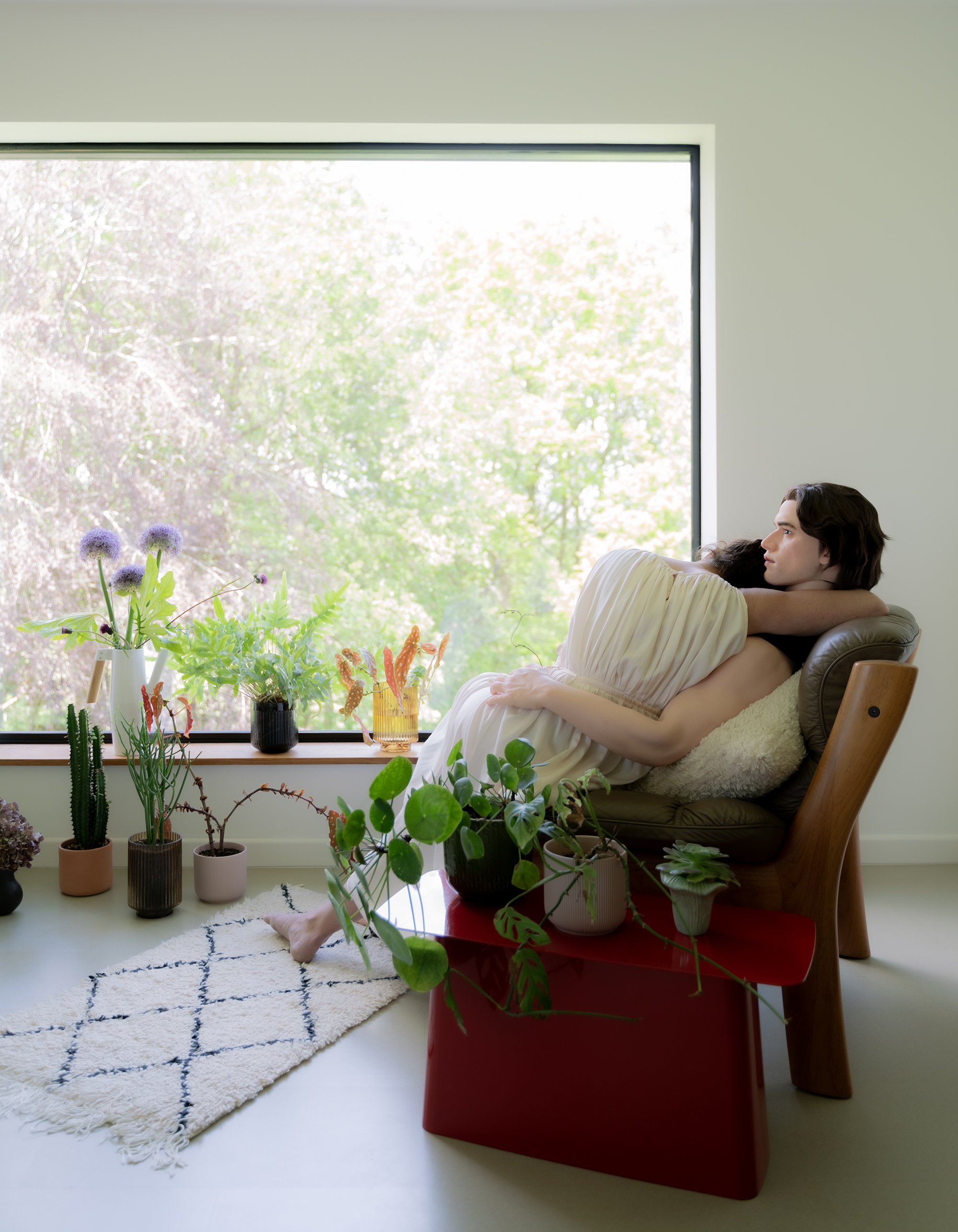
In Love me tender, Soul’s most recent project, this artifice takes physical form. A hyperrealistic male sex doll assumes the role of companion and object of desire in photographs and a photographic installation. Its manufactured body allows closeness to be staged and tenderness to be projected, while its silence makes the absence of a response palpable. The fantasy of companionship meets the need for affection. By placing this body under a female gaze that chooses it and assigns it a role, Soul introduces an ironic reversal of conventional positions between the desiring subject and the desired object. The scenes preserve the tension between the possibility of inventing a relationship and the vulnerability of the person who longs for it. Humor coexists with tenderness; the visible artifice leaves the emotional experience open.
The curatorial reading finds resonances in Julia Kristeva’s reflections on idealization and the construction of the beloved, Corín Tellado’s romantic melodrama, and the feverish tenderness of Gabriel García Márquez’s Love in the Time of Cholera. Theory, popular fiction, and poetry meet in a consideration of the stories that continue to sustain desire. The collective dreams once shaped by romantic novels and photo-novels find new forms on screens, where familiar promises of love return in an endless loop. Love After Love emerges as a gesture of resistance: The feminine narrative of love becomes a space of humor and lucidity, where desire retains the capacity to imagine other ways of living. Beneath the brightness of the photographs lies the quiet awareness that even beauty, like love, can vanish at the speed of light.
Marta Soul (Madrid, 1973) is a Spanish visual artist whose work explores the relationships between identity, desire, and representation. Through staged photography, she examines how cultural conventions, stereotypes, and fantasies shape social behaviour and emotional life, with a particular attention to female experience. In 2020, she founded Cómo ser Fotógrafa (How to be a woman photographer), a platform dedicated to increasing the visibility of contemporary women photographers from Spain and Latin America. Her work is held in major public and institutional collections, including the J. Paul Getty Museum, Los Angeles; the Art Collection of the Spanish Royal Household; Fundación “la Caixa”; Fundación ENAIRE; and the Hubei Museum of Art, China.
Ângela Berlinde (Porto, 1975) is an artist, independent curator, and photography researcher. Holding a PhD from the University of Minho and a postdoc from UFRJ (Brazil), her practice intersects photography with literature, cinema, and painting. She is the artistic director of the SOLAR Photo Festival (Brazil), co-founder of NERVO – Photobook Observatory (Portugal), and a university professor at UMinho and Universidade Lusófona. She lives between Portugal and Brazil.
For press and other inquiries, please email: info@benrubigallery.com